


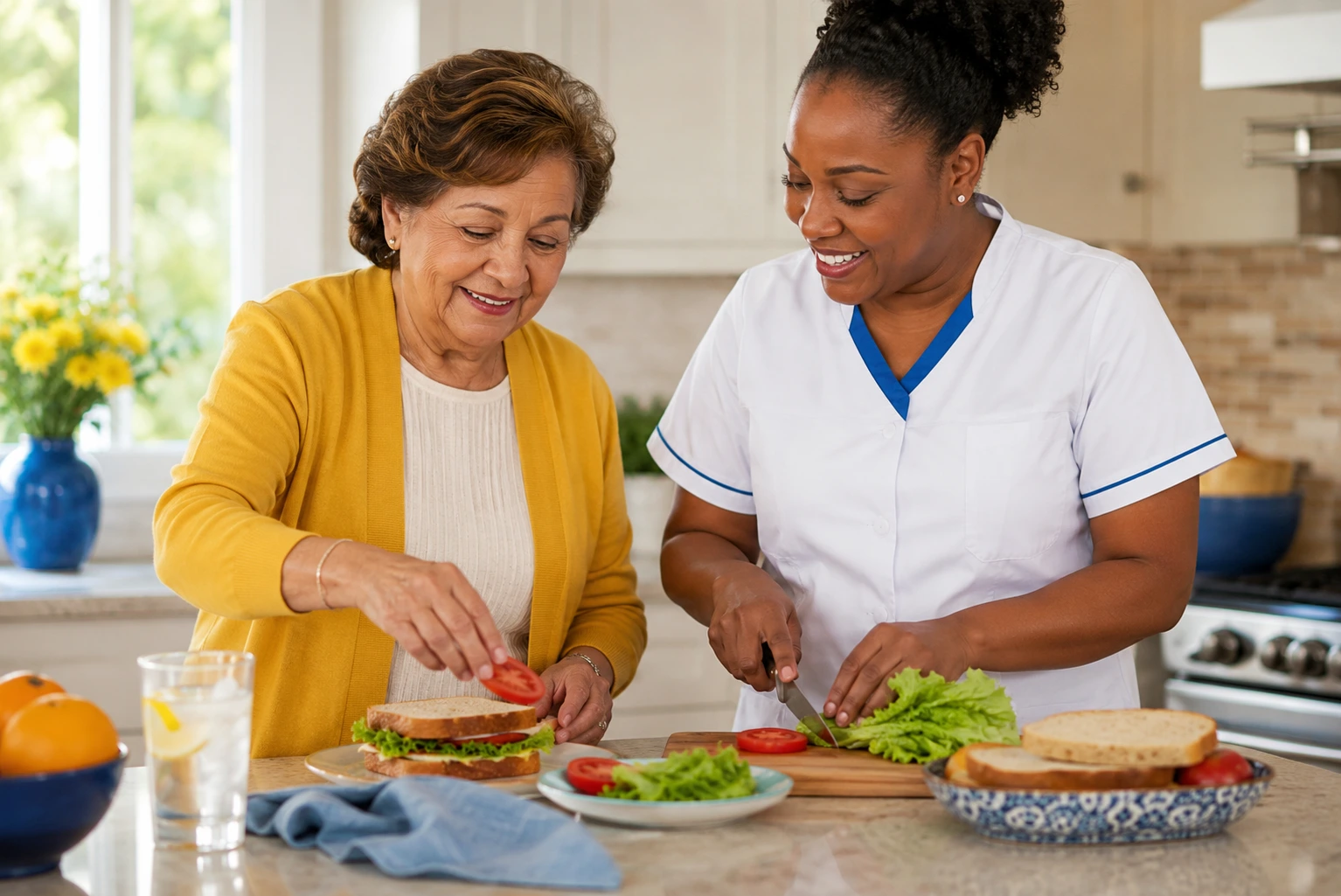
Regular meals, fluids, comfortable movement, safe surroundings, social contact, and a familiar daily rhythm can support a senior’s health and well-being at home. These habits work best when they fit the person’s preferences, energy, and abilities.
Small routines often matter more than complicated plans. A glass of water kept within reach, a regular lunchtime, a clear walking path, or a short phone call can make the day easier to manage.
You may first notice changes in ordinary moments. Your loved one may skip breakfast, leave laundry unfinished, cancel errands, or spend more time sitting alone. One missed task may not mean much, but repeated changes can show that parts of the day are becoming harder.
At Absolutely For Seniors (and Anyone in Need), we help you support daily routines while respecting your loved one’s choices and independence.
If meals, household tasks, or other daily activities are starting to take more effort for your loved one, you can see how our senior home care services in Las Vegas may support their routine.
Which Daily Habits Matter Most for Seniors at Home?
The most useful daily habits support basic needs and give the day a steady shape. Regular meals, hydration, movement, rest, social contact, and a safe home setup can contribute to comfort and independence when each habit is simple enough to maintain.
A practical routine may include:
- Eating at familiar times
- Drinking fluids throughout the day
- Moving in ways that feel comfortable
- Keeping walkways and commonly used areas clear
- Staying in contact with family, friends, or a companion
- Following a familiar pattern for waking, meals, errands, and rest
These habits do not need to follow a strict schedule. Appointments, visitors, energy levels, and other changes will affect the day. A dependable rhythm simply makes important tasks easier to remember and helps your loved one know what to expect.
Start with what already works. If your loved one prefers a late breakfast, enjoys walking to the mailbox, or calls a family member after dinner, those familiar habits can anchor the rest of the day. For many families, routines like these are part of helping someone age at home, sometimes called aging in place.
How Can These Habits Be Made Easier to Maintain?
Daily habits are easier to maintain when they connect to familiar activities and receive support before tasks become overwhelming. Small adjustments can reduce the effort involved in meals, movement, household tasks, and social contact while allowing your loved one to keep making choices about the day.
Keep Meals and Drinks Within the Existing Routine
Meals are easier to maintain when food is simple to prepare and connected to familiar times. Your loved one may do well with a light breakfast, a prepared lunch, or a few easy choices that require little cooking and still reflect their preferences.
Keep commonly used foods where they are easy to see and reach. Place drinks in familiar locations, such as beside a favorite chair or at the kitchen table. If your loved one follows instructions from a clinician about fluids or diet, those directions should guide the routine.
Look at the tasks around the meal, not only the food. Shopping, opening containers, washing dishes, and cleaning the kitchen may take more energy than eating. When cooking, dishes, or laundry begin to take more effort, meal preparation and light housekeeping support can make those everyday tasks easier to manage.
Practical support might include preparing ingredients, portioning meals, washing dishes, or making a short grocery list together. Your loved one can remain involved while receiving help with the parts that have become tiring.
Build Comfortable Movement Into Normal Activities
Movement can be part of ordinary activities rather than a formal exercise plan. Standing during a television break, walking through the home, tending to a plant, folding towels, or taking a short walk outside may fit naturally into your loved one’s day.
Choose activities that match their comfort, balance, and usual ability. Stop if they experience pain, dizziness, or unusual fatigue. A healthcare professional can provide guidance when there are medical concerns or uncertainty about what is appropriate.
Timing and setup can make movement easier. Your loved one may feel more comfortable earlier in the day or when another person is present. Keeping shoes, a sweater, or a walking aid in the same place can remove small barriers to getting started.
Make the Home Easier to Navigate
A familiar, uncluttered setup can make everyday movement feel more manageable. Begin with the areas your loved one uses most, including the route from the bedroom to the bathroom, the kitchen, a favorite chair, and the entrance to the home.
Clear walkways, good lighting, and easy-to-reach household items are practical ways to keep seniors safe at home while preserving familiar routines.
Helpful adjustments may include:
- Moving loose cords away from walking paths
- Keeping frequently used items at a comfortable height
- Turning on lights before entering darker rooms
- Returning glasses, phones, and keys to the same place
- Choosing footwear that fits securely
- Leaving enough time so your loved one does not need to rush
Focus on changes that solve a real problem. One or two thoughtful adjustments may be more useful and less disruptive than changing the entire home at once.
Protect Familiarity, Rest, and Social Connection
A balanced routine includes time for rest, companionship, and activities your loved one enjoys. Regular social contact can break up long quiet stretches, support staying engaged, and give the day something familiar to look forward to.
Connection can be simple: sharing lunch, calling a friend, listening to music together, sitting outside, working on a puzzle, or having company during an errand. A short visit may suit your loved one better than a long outing, and quiet company may feel more comfortable than a full activity schedule.
Leave room between tasks, errands, and appointments. Breaking larger chores into smaller parts can help your loved one participate at a manageable pace without feeling hurried.
When Do Daily Habits Become Harder to Maintain?
Occasional changes are normal. Repeated difficulty across several parts of the day, however, may show that extra help would be useful. Look for patterns over time instead of treating one missed meal, unfinished chore, or cancelled plan as proof that care is needed.
Changes that may deserve a closer look include:
- Meals being skipped regularly
- Drinks often being left untouched
- Dishes, laundry, or trash continuing to build up
- Errands or appointments being cancelled more often
- Less movement around the home
- Frequently misplaced everyday items
- Longer periods spent alone
- Family caregivers taking on more support than they can maintain
The reason behind a change matters. Your loved one may be tired, recovering from an illness, adjusting to a new routine, or simply having a difficult week. Begin with a calm conversation about what feels harder.
Specific questions are often easier to answer than “Do you need help?” Try asking, “Would it help if someone prepared lunch twice a week?” or “Would you like company when you go to the store?” Listen for the tasks your loved one wants to keep managing independently.
How Can Home Care Support a Senior’s Daily Routine?
Non-medical home care can help with practical parts of the day that have become tiring, inconsistent, or difficult to manage alone. Support may be occasional or regular, depending on your loved one’s routine, your availability, and the tasks that need attention.
At Absolutely For Seniors (and Anyone in Need), we can help with:
- Meal preparation
- Light housekeeping
- Companion care
- Transportation help
- Personal care
- Routine support
- Daily check-ins
- Respite for family caregivers
The right schedule may begin with only a few areas of support. Your loved one might need help preparing meals and keeping up with laundry, or they may benefit more from transportation, companionship, or support with private daily routines.
You may also need to consider how much help you can provide consistently. Weekend visits may not cover weekday needs, and a spouse who handles many tasks may still need regular breaks. Clear expectations keep the routine from depending on one person’s availability.
When regular help becomes part of the conversation, daily routines, safety concerns, and the amount of support needed are important points to consider before choosing non-medical home care services.
Our role is to support what matters in your loved one’s day. That may mean preparing a familiar meal, helping with a household task, providing a ride, or being present during a long afternoon.
Absolutely For Seniors (and Anyone in Need) works with you to shape support around your loved one’s needs, preferences, and existing routine. Care should feel useful, respectful, and connected to everyday life at home.
Frequently Asked Questions
What are the most important daily habits for seniors at home?
The most important habits usually include regular meals, fluids, comfortable movement, rest, social contact, and a home setup that is easy to navigate. A familiar daily rhythm can also make tasks easier to remember and reduce the effort of planning each part of the day.
How can I help my loved one without taking over?
Offer specific help and ask what would be welcome. You might prepare part of a meal, handle a load of laundry, provide a ride, or spend time together during a task. Keep your loved one involved in decisions and preserve the routines they can and want to manage independently.
When should a family consider help with daily routines?
Consider a conversation about support when changes become frequent or affect several parts of the day. Repeatedly skipped meals, unfinished household tasks, cancelled errands, less social contact, or increasing strain on family caregivers may suggest that steady help would make the routine more manageable.
Daily habits can support comfort, independence, and a steadier day at home. Start with the routines your loved one already values, notice where effort is increasing, and add help where it can make the biggest practical difference.
If your loved one would benefit from steady help with meals, household routines, companionship, or safety at home, you can set an appointment today to talk with us about support that fits their routine.


Leave a Reply