



Simple social activities for seniors at home can help a loved one stay engaged, keep a steadier routine, and feel less isolated during the week. The best activities are familiar, low-pressure, and easy to adjust based on the senior’s energy, interests, and comfort level.
These activities do not need to be complicated. A shared meal, a short walk, a familiar song, or time spent looking through family photos can make the day feel less empty. For families, the goal is not to fill every hour. It is to help a loved one have more steady, supported moments during the week.
Absolutely For Seniors (and Anyone in Need) understands that staying engaged at home can become harder when a loved one lives alone, has limited transportation, or no longer feels as active during the week.
Social connection, daily routine, and companionship are all things families may need to consider before choosing non-medical home care services, especially when a loved one is spending more time alone at home.
Why Simple Social Activities Matter
Simple activities can give the day more structure and help seniors stay connected to people, interests, and familiar routines. For many families, the concern is not only boredom. It is that a loved one may be slowly pulling away from the parts of the day that keep them engaged.
A senior may stop calling friends as often. They may lose interest in hobbies. They may spend more time watching television because it feels easier than planning something else. They may skip meals, nap more during the day, or seem less interested in getting ready.
These changes can happen slowly. At first, they may look like normal quiet days. Over time, they can affect how steady the week feels.
Simple social activities can help by adding small moments of routine. A morning phone call can give the day a starting point. Folding towels with someone nearby can make a household task feel less tiring. Sharing lunch can encourage a regular meal. Sitting outside can break up long hours indoors.
Activities can also help families notice changes. If a loved one suddenly loses interest in something they usually enjoy, seems more tired, or avoids simple tasks, that may be worth paying attention to. The activity itself is not the only point. It is also a way to stay connected to how the person is doing.
The key is to keep activities respectful. They should not feel childish, forced, or too busy. A helpful activity should fit the person, not the other way around.
Easy Social Activities Seniors Can Do at Home
The best social activities for seniors at home are simple, familiar, and easy to adjust. They should feel natural to the person, not like a task they have to perform.
Looking through family photos is a good place to start. Photos can bring up familiar names, places, and stories without requiring too much energy. They can also give family members or caregivers an easy way to connect without forcing conversation.
Sharing a meal or snack can also be helpful. This does not need to be a large meal. A sandwich, soup, fruit, or tea can create a natural pause in the day. For seniors who tend to skip meals when alone, eating with someone else may make meals feel more inviting.
Listening to favorite music can make quiet parts of the day feel warmer. Familiar songs may bring back memories, create comfort, or simply make the room feel less still. Some seniors may want to talk about the music. Others may just want to listen.
Reading together can work well too. This might mean reading a short article, a devotional, a letter, or part of a book. It does not need to be long. The goal is to create a shared moment, not finish a project.
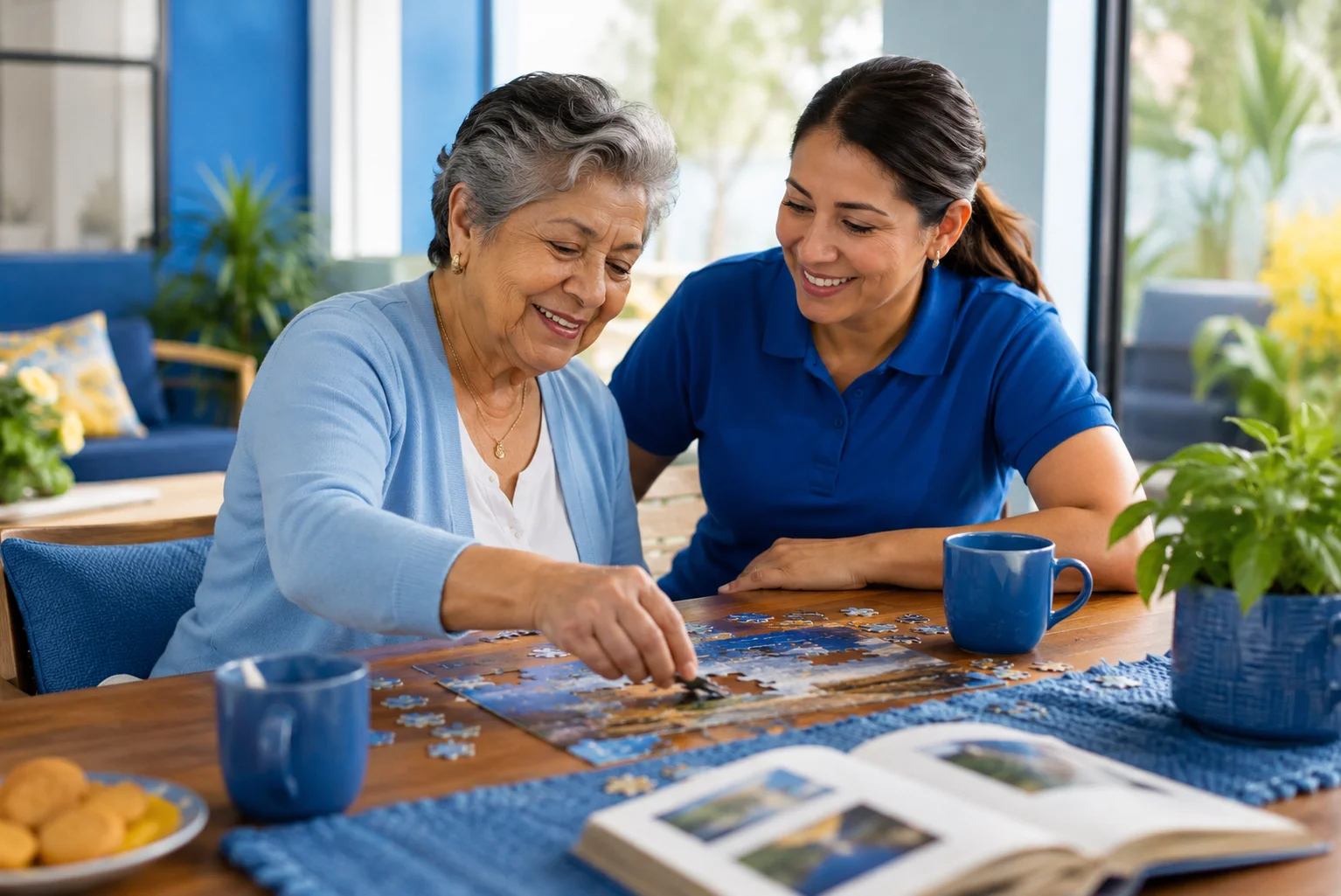
Simple puzzles or card games can help some seniors stay engaged without too much pressure. The activity should match the person’s interest and patience level. If it becomes frustrating, it is better to stop or switch to something easier.
Light household tasks can also be social when done together. Folding towels, watering plants, organizing a drawer, or sorting mail may help a senior feel involved in the home without being overwhelmed. These tasks can support routine while leaving room for conversation or quiet company.
Other simple activities may include:
- Calling or video calling family
- Sitting outside or near a sunny window
- Writing cards or short notes
- Preparing a simple recipe together
- Watching a familiar show and talking about it afterward
- Looking through old letters or keepsakes
- Taking a short walk inside or outside, when safe
- Caring for plants
- Listening to an audiobook or radio program
- Doing a simple craft or seasonal activity
The best activity is usually one the senior already understands and enjoys. New activities can be helpful, but familiar ones often feel easier to accept.
How Activities Support Aging at Home
Social activities can support aging at home by helping a loved one keep a rhythm to the day. They can make home life feel more active, familiar, and manageable without requiring a major change in routine.
For many families, small routines and familiar activities are part of how they help seniors age at home while keeping the week more steady and manageable.
Aging at home is not only about having a safe place to live. It is also about whether the day still feels meaningful and manageable. A loved one may be physically safe at home but still need more structure, encouragement, or connection during the week.
Activities can fit into normal routines. A shared breakfast can support better eating. A short walk can encourage safe movement. A phone call can break up a quiet afternoon. Folding laundry together can make a household task feel less isolating.
Simple activities can also help seniors feel useful. Many older adults do not want to feel like everything is being done for them. They may appreciate tasks they can still take part in, even if the task is small. Watering plants, sorting napkins, choosing music, or helping plan lunch can give the day more involvement.
The goal is not to keep someone busy every minute. Too much activity can feel tiring or irritating. The goal is to build in moments that support the senior’s routine, personality, and energy.
When activities are chosen well, they can support independence. They give seniors something to look forward to without making the day feel controlled by someone else.
How Companion Care Can Help
Some seniors may want to stay engaged but need someone present to make activities easier to start and continue. Companion care can help by adding steady presence, encouragement, and routine during the week.
For seniors who spend much of the week alone, companion care for seniors can help support routine, presence, and simple activities at home.
A companion caregiver may help a senior choose an activity, prepare for it, and stay with it for a comfortable amount of time. That may mean sitting together during lunch, walking to the mailbox, listening to music, or helping with a familiar household task.
The support should not feel forced. Some seniors enjoy conversation. Others prefer quiet company. Some may like activities with a clear purpose, such as folding towels or preparing a snack. Others may prefer something more relaxed, such as sitting outside.
Good companion care respects those differences. It does not treat social activities as a checklist. It uses activities as a way to support the day.
Companion care can also help families when they cannot visit as often as they would like. A regular caregiver can spend time with a loved one, notice changes, and help keep the week from feeling so empty.
This kind of support can be especially helpful when a senior is not asking for help but is clearly becoming less engaged. Families may see the change, but they may not know how to step in without making their loved one feel pressured. Companion care can offer a gentler bridge.
How Non-Medical Home Care Can Support Activities
Non-medical home care can support activities by helping seniors keep a steadier daily routine. This may include companionship, meal support, transportation, light housekeeping, reminders, or help moving through the day safely.
Absolutely For Seniors (and Anyone in Need) provides non-medical home care services that can support companionship, routine, and simple daily activities at home.
Support can be built around the senior’s normal day. If mornings are slow, a caregiver may help the person get started. If afternoons feel lonely, a visit during that time may bring more structure. If meals are being skipped, support around lunch or dinner may make sense.
Activities can also happen naturally around other care needs. Preparing a snack together can support meal routines. Walking to the porch can add gentle movement. Looking through mail can help the senior stay involved in the household. A ride to an appointment can include time for conversation and reassurance.
Non-medical home care can also help families notice when something changes. If a loved one loses interest in activities, starts eating less, seems more withdrawn, or has less energy, regular support can make those changes easier to see.
This does not mean every quiet day is a problem. Some seniors enjoy quiet time and should have it. The concern is when quiet becomes withdrawal, when routines start slipping, or when the senior seems less connected to the day than before.
The focus should stay on comfort, routine, and connection. Activities should support the senior’s life at home, not make the day feel scheduled or crowded.
Choosing Activities That Fit Your Loved One

Families can choose better activities by starting with what the senior already likes, not what sounds good on a list. The right activity should match the person’s energy, personality, mobility, and comfort level.
Start with familiar interests. If your loved one enjoyed gardening, try watering plants or looking through seed catalogs. If they liked cooking, try preparing a simple recipe together. If they enjoyed music, play songs they already know.
Keep activities short at first. A ten-minute activity that feels good is better than a long one that becomes tiring. Seniors may have different energy levels from day to day, so it helps to stay flexible.
Avoid activities that feel childish. Even simple activities should feel adult and respectful. A senior may not want to be entertained. They may want to feel included, useful, or connected.
Let your loved one choose when possible. Offer two options instead of giving instructions. For example, ask, “Would you rather listen to music or sit outside for a few minutes?” Choice helps the person feel more in control.
Pay attention to changes in vision, hearing, mobility, or memory. A loved one who used to enjoy reading may need larger print. Someone who enjoyed walking may now need shorter, safer routes. A person who gets tired easily may prefer quiet activities.
Use activities as a way to connect, not correct. If your loved one does something differently than you would, let it be. The goal is not perfection. The goal is time together, routine, and comfort.
A simple activity is only helpful if it feels comfortable and natural to the person doing it.
The Bottom Line on Social Activities at Home
Simple social activities can help seniors stay connected to the day, the people around them, and the routines that make home feel familiar. They do not need to be elaborate to be meaningful.
For families, the goal is not to fill every hour. It is to help a loved one have more steady, supported moments during the week. A shared meal, a familiar song, a short walk, or quiet time with someone nearby can make the day feel less isolating.
The best activities are the ones that fit the senior’s real life. They should respect the person’s energy, preferences, and comfort level. When activities are simple and familiar, they are easier to keep as part of the weekly routine.
If your loved one is spending more time alone or needs help staying engaged during the week, you can set an appointment with Absolutely For Seniors (and Anyone in Need) to talk through support that fits their routine.



Leave a Reply